What does public liability insurance not cover?
Public liability insurance generally doesn’t cover injury to your own employees, damage to your own property, the cost of fixing your own faulty work, registered vehicles or professional advice. Policies also commonly exclude fines, asbestos, gradual pollution and liability you take on under a contract. Some exclusions give part of the cover back, so the policy wording decides.
Public liability exclusions.
We read the public liability sections of four current policies, from CGU, QBE, Allianz and Vero. All four exclude a similar list. What’s covered always depends on the wording.
- Your own employees Injury to your own workers is excluded, because workers’ compensation covers it1–4. Employers get that from an authorised insurer5. CGU and QBE don’t count volunteers or work-experience students as workers1, 2.
- Your own property “Property Damage to property owned by You”, in QBE’s and Allianz’s words2, 3. Your premises, stock and tools are for property covers, such as building and contents or portable equipment insurance5.
- Fixing your own work “The cost of performing, completing, correcting or improving any work undertaken by You”, in QBE’s words. The other three say much the same1–4.
- Registered vehicles Injury or damage involving a vehicle that’s registered, or legally required to be1–4. Third party personal injury insurance is often part of the registration fee5. See business motor insurance.
- Professional advice “The rendering of or failure to render professional advice or service”, in Allianz’s and Vero’s words3, 4. Victoria’s procurement guide says public liability policies “exclude risks covered by more specific insurances, such as professional indemnity insurance”6. See public liability vs professional indemnity.
- Fines and penalties Fines, penalties, and damages a court awards to punish rather than to compensate1–4.
- Asbestos and pollution Anything to do with asbestos “in whatever form or quantity”, in QBE’s words, with no exception in any of the four. Pollution too, unless it was sudden and accidental (see below)1–4.
Products have their own exclusions. All four leave out recall costs and damage to the faulty product itself, and Vero covers injury or damage your products cause only if “Products Liability” is on your schedule1–4.
What some policies give back.
Many exclusions have a narrower exception, called a write-back, that returns part of the cover. These are the main ones in the four wordings.
- Damage your work causes Fixing the work itself stays excluded, but Allianz and Vero say the exclusion doesn’t apply to injury or damage resulting from faulty work3, 4. The Federal Court drew the same line in 2025 (below)7.
- Property in your care Other people’s property you’re holding is excluded, then given back up to $250,000 in CGU, QBE and Allianz, or the limit on Vero’s schedule1–4. The part you’re working on stays excluded if the damage comes solely from your work1–3.
- Premises you rent Damage to premises you lease or rent is given back in all four, but not by CGU, QBE or Vero if the lease made you responsible for insuring them1–4.
- Vehicles Loading and unloading, tools or plant attached to a vehicle and used as a tool of trade, and injury that compulsory third party (CTP) insurance doesn’t cover1–4.
- Advice Advice given free, in CGU and Allianz, and first aid, in CGU, Allianz and Vero1, 3, 4.
- Pollution A sudden, unintended and unexpected escape that happens all at once, at a specific time and place1–4.
Who has to prove what: you show that a claim falls within the cover, and the insurer then has to prove that an exclusion applies7.
Would public liability cover it?
Everyday examples, then a court case and two declined claims. What’s covered always depends on the policy wording.
| What happened | Usually covered? |
|---|---|
| A customer slips on a wet floor in your shop | Yes. It’s what public liability is for |
| Your apprentice is hurt on site | No. Workers’ compensation |
| A slab you laid cracks and has to be relaid | No. It’s fixing your own work |
| A pipe you fitted leaks and damages the client’s ceiling | Often, for the ceiling, not the pipe |
| A customer’s bike is knocked over in your workshop | Often, up to a limit such as $250,000 |
| You reverse your ute into a client’s fence | Usually not. The vehicle exclusion |
| Your tools are stolen from your ute | No. They’re your own property |
- Boat painter, 2025A marine business’s faulty paint job led to corrosion, and a court ordered it to pay the vessel’s owner $260,000 plus $320,000 in costs. After the business was deregistered, the owner claimed on its public liability policy. The Federal Court held the first repairs only corrected the work, so just a $25,000 extension applied, but later repairs also fixed corrosion that had spread and were covered in full. The insurer was ordered to pay $507,5107.
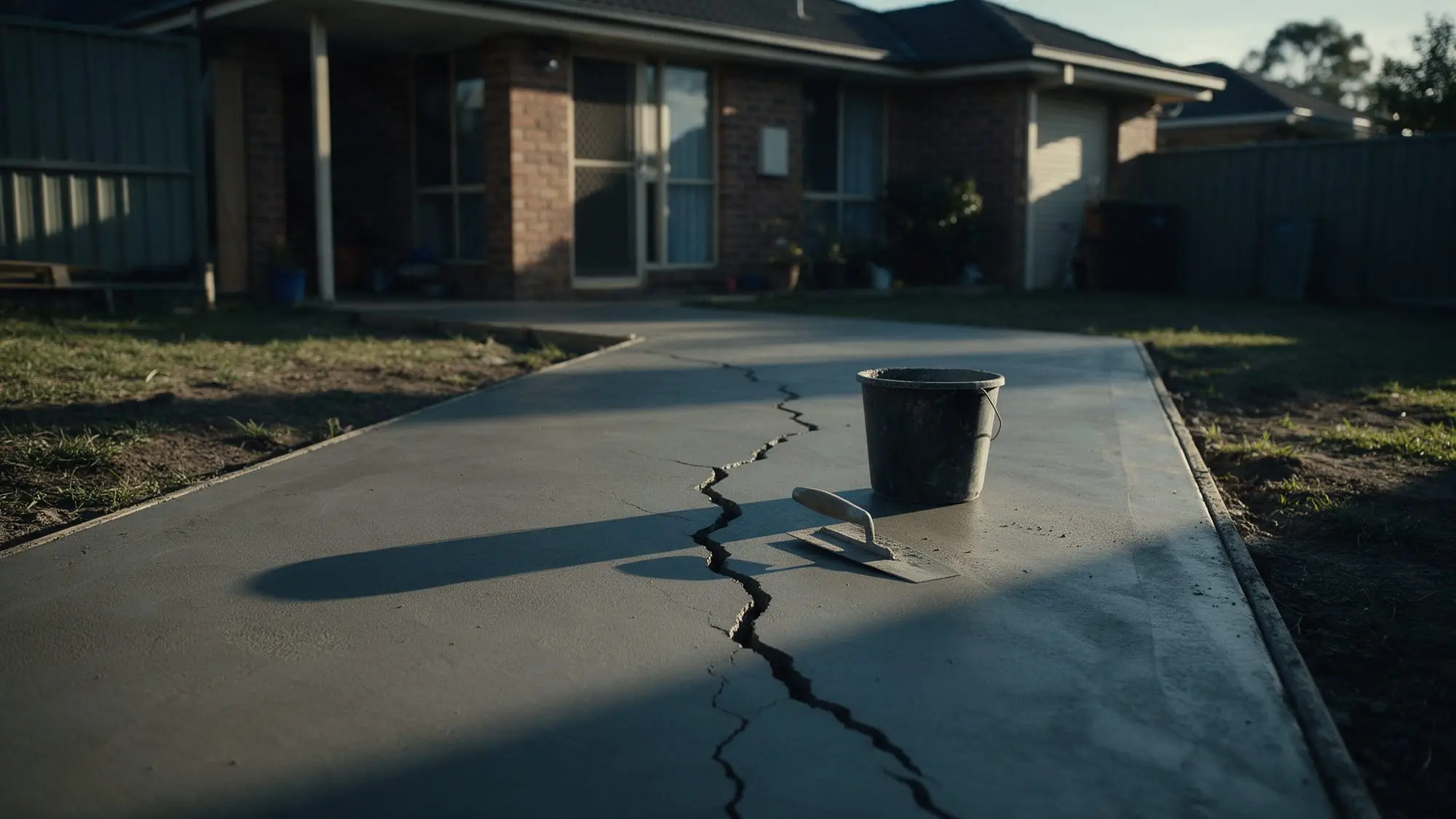
- ConcreterCracks appeared in a client’s pergola slab, and repairs didn’t fix them. The claim for fixing the work was declined under the faulty workmanship exclusion8.
- Steel fixerDriving home from a site, they were in a collision at a roundabout, and the other driver’s insurer sought its repair costs from them. The public liability claim was declined under the vehicle exclusion8.
These examples come from a court and a broker, not the Australian Financial Complaints Authority (AFCA). AFCA’s rules leave out liability policies, so it generally can’t hear a small business’s complaint about a declined public liability claim. A complaint about a broker can still go to AFCA9.
Subcontractors and contracts.
Two gaps that come from who the policy insures and what you sign, rather than from a single exclusion.
- Your subcontractors None of the four wordings lists your subcontractors as insured. They cover the named business, its directors, employees and volunteers, and a principal for work you do for them1–4. Berkley, an insurer, says your business could still be held liable for a subcontractor’s work, which is why “most Insurers require policyholders to attain some form of evidence” that subcontractors hold their own liability insurance10. See what a certificate of currency shows.
- Liability you agree to CGU and Vero exclude liability you take on under a contract, unless the law would have imposed it anyway1, 4. QBE notes that “It is not possible for You to transfer to Us the entire spectrum of legal liabilities” you may bear under indemnity and hold harmless clauses, which make you responsible for another party’s losses2.
- Liquidated damages A set amount a contract makes you pay for a delay or breach. All four exclude them1–4.
- Everyday contracts Leases and utility agreements are given back in all four1–4.
Whether a subcontractor counts as your worker for workers’ compensation is a separate question, with a different test in each state. Our guide to who counts as a worker explains it.
Common questions.
Does public liability cover employees?
No. Injury to your own employees is excluded because workers’ compensation covers it, which most employers must hold. Some wordings don’t count volunteers or work-experience students as workers.
Does public liability cover poor workmanship?
Not the cost of fixing or redoing your own work. Damage that work causes to other property can be covered: in a 2025 case, an insurer had to pay for corrosion that spread after a faulty paint job.
Does public liability cover subcontractors?
It doesn’t insure them. The wordings we read cover your business, its directors, employees and volunteers. Your business can still be held liable for a subcontractor’s work, and one insurer says most insurers want evidence that subcontractors hold their own liability insurance.
Does public liability cover theft?
Not theft of your own tools, stock or equipment, because it excludes your own property. Portable equipment insurance is designed for tools you take on a job, including theft.
Does public liability cover car damage?
Not damage caused by a registered vehicle, which all four wordings we read exclude. They give some cover back, such as for loading and unloading.
Can I complain to AFCA if my claim is declined?
Generally not about an insurer’s decision on a public liability claim, because AFCA’s rules leave out liability policies for small businesses. A complaint about a broker can still go to AFCA.
Still have a question? A broker can talk it through with you.
Get matched with a brokerTalk it through with a broker.
This guide is general information. A licensed or authorised broker can look at your business and explain your options.
- Free for businesses, with no obligation
- One broker who works with businesses like yours
- No calls from multiple insurers
Get matched with the right broker in a few simple steps
Tell us about your business and we’ll match you with a broker relevant to your enquiry. You’ll only be contacted by one relevant provider.
Step 1 of 3Covers in this guide.
Our guides to what each cover generally does, what it costs and the rules that apply.
Sources.
- Business Insurance PDS and Policy Booklet (CV671 REV8), Section 5 General and Products Liability, CGU, 1 May 2025
- General and Products Liability Policy Wording (QM8216-1124), QBE, 16 October 2024
- Trades and Services Pack PDS (POL986BA), Public and Products Liability Section, Allianz, 9 April 2026
- SME Business Insurance PDS and Policy Wording (V11562), Section 6 Liability, Vero, 11 March 2025
- Types of business insurance, business.gov.au, 8 November 2024
- Insurance in procurement: goods and services guide, Victorian Government (Buying for Victoria), 12 March 2026
- Helicopter Aerial Surveys Pty Ltd v Insurance Australia Limited (No 2) [2025] FCA 1360, Federal Court of Australia, 7 November 2025
- Common reasons why insurance claims are declined: Insider Report Part 1, BizCover, 10 June 2025
- AFCA Rules, Australian Financial Complaints Authority, 12 March 2026
- Are all sub-contractors covered in a public liability policy?, Berkley Insurance Australia