Marine Cargo Insurance, matched properly
Marine cargo insurance explained: marine transit and freight cover, ICC A, B and C, carriers’ liability limits, Incoterms, published costs, and one licensed or authorised broker to arrange it.
- No obligation
- Licensed or authorised brokers
Get a quote from a licensed or authorised broker in a few simple steps
Tell us about your business and the cover you’re after.
Step 1 of 3What is Marine Cargo Insurance?
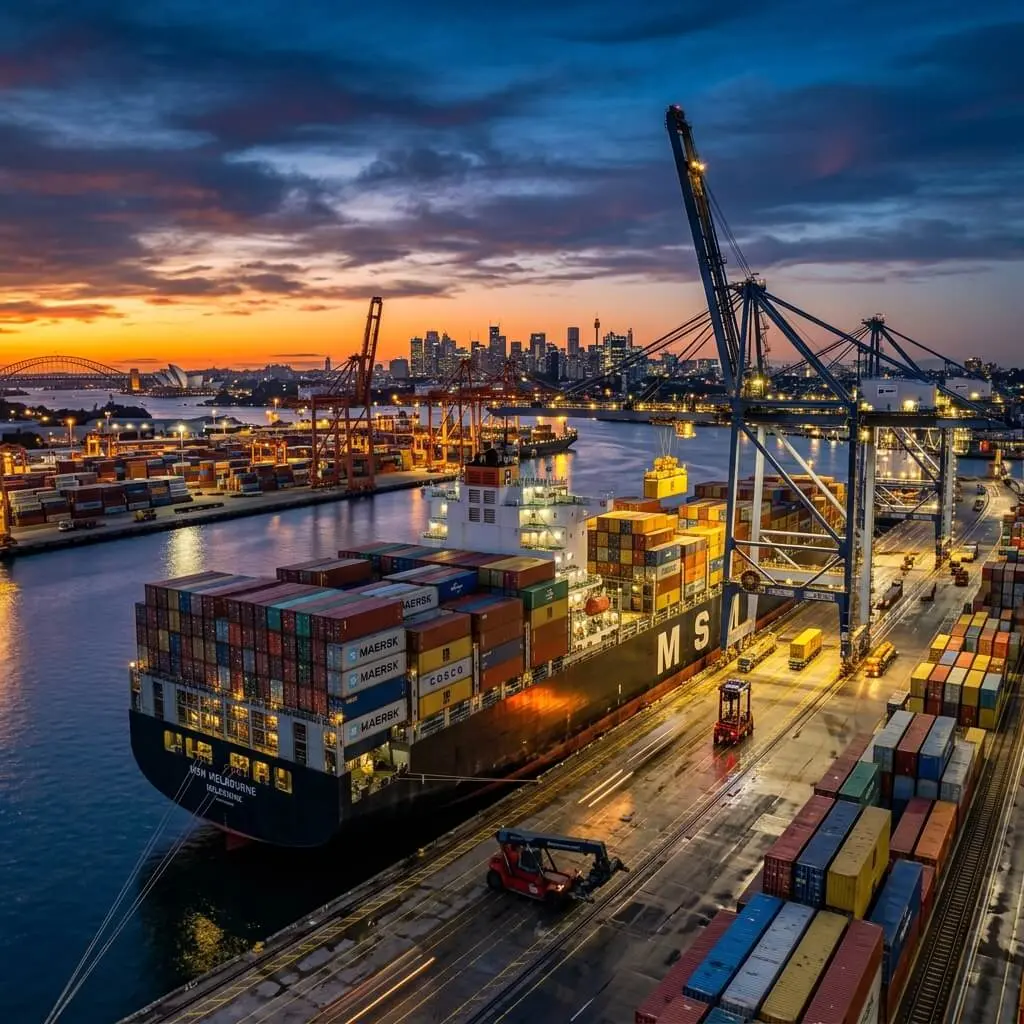
Marine cargo insurance, also called marine transit or freight insurance, generally covers goods against loss or damage while they’re moved by sea, air or road, usually from the seller’s warehouse to the buyer’s. Goods in transit insurance generally does the same for goods moved within Australia. A carrier’s own liability is limited, often to far less than the goods are worth.
Who commonly considers it.
- Importers & Exporters Businesses moving goods across international borders and arranging insurance for imports or exports
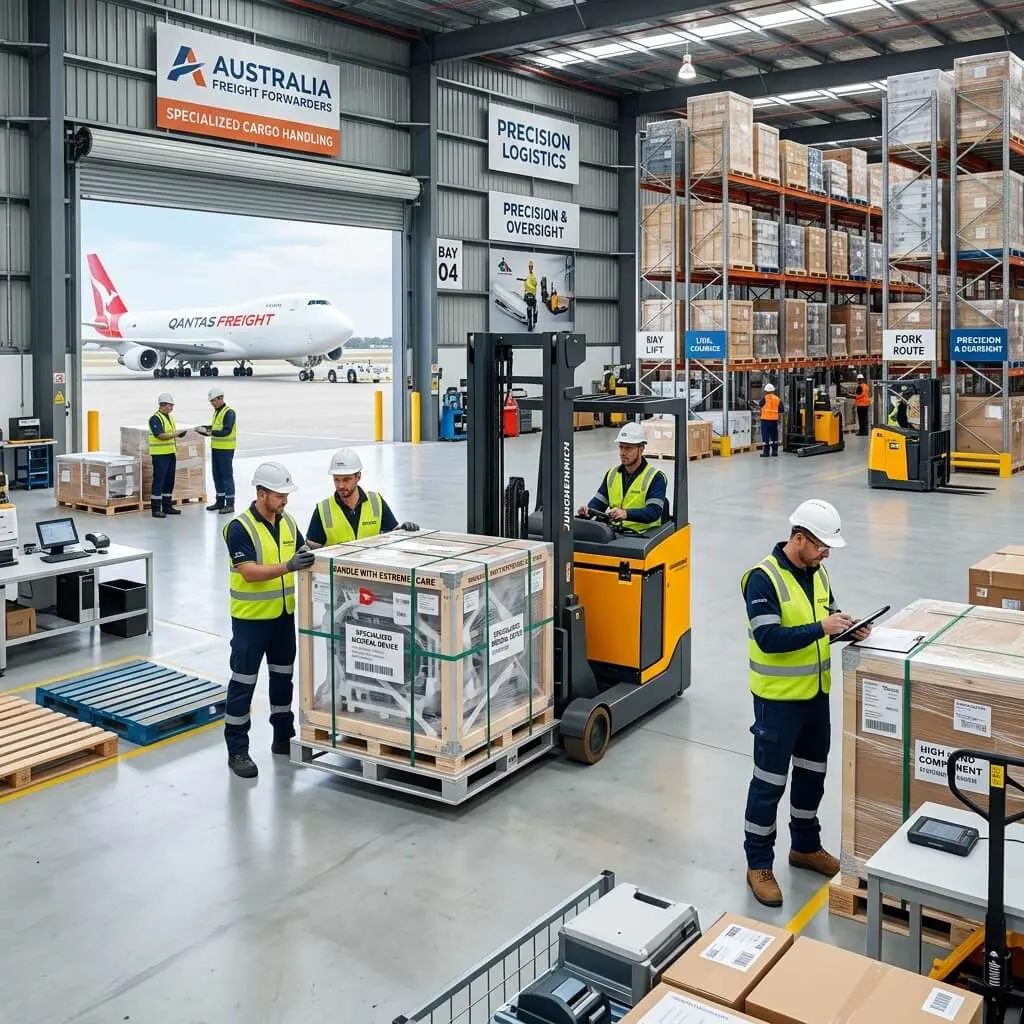
- Freight Forwarders Logistics professionals managing third-party cargo
- Manufacturers Firms shipping components and finished products globally
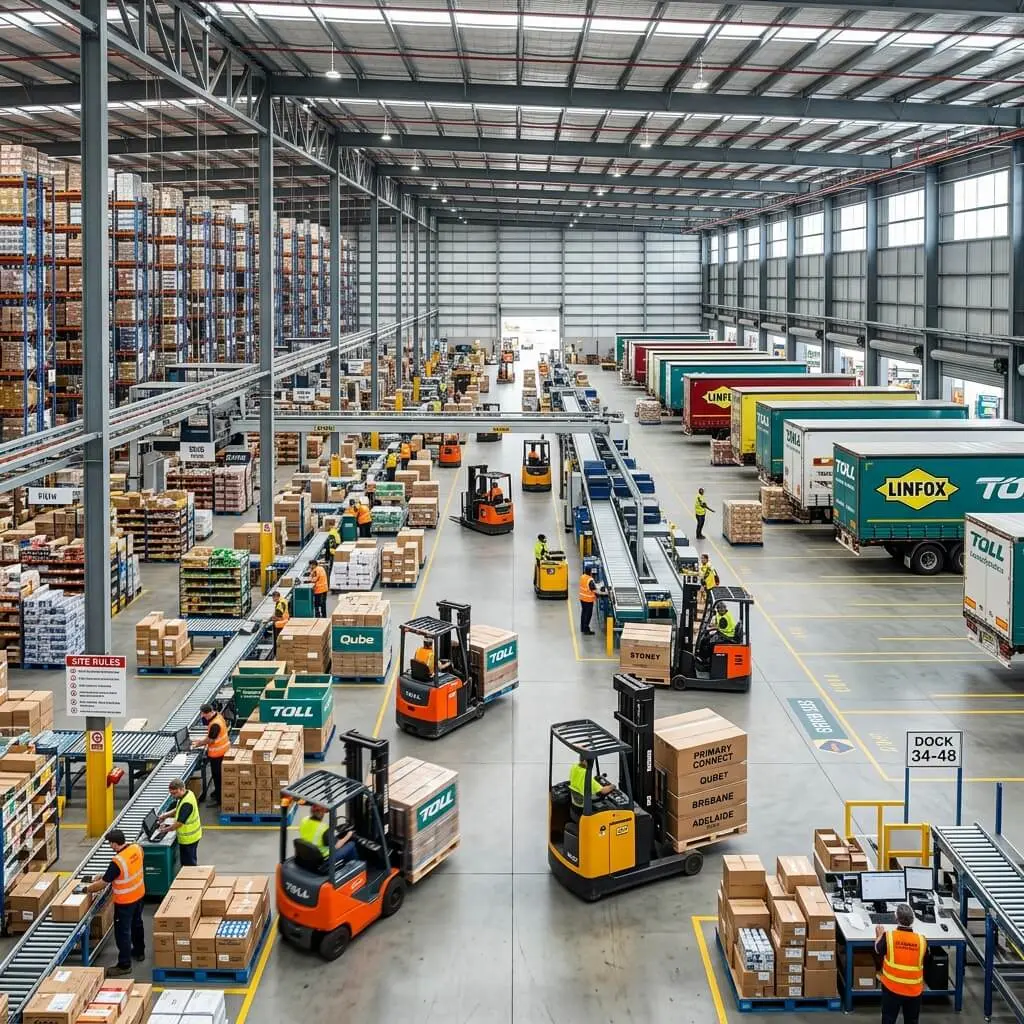
- Wholesalers & Distributors Domestic shippers moving volume between states
What marine cargo insurance covers.
Most marine cargo policies use the Institute Cargo Clauses, which come in three levels.
- Clauses (A) All risks of loss or damage, subject to the exclusions1.
- Clauses (B) Named events only, such as fire or explosion, the ship sinking or running aground, a truck overturning, collision, earthquake, goods washed overboard, water getting in, and total loss of a package dropped overboard or while loading or unloading1, 31.
- Clauses (C) A shorter list of named events than (B), without earthquake, washing overboard, water getting in or dropped packages1.
- Theft Clauses (B) and (C) only cover listed events, and theft isn’t one of them. They also exclude deliberate damage by anyone. Theft can usually be added as an option1, 31.
- Warehouse to warehouse Cover starts when goods are first moved in the warehouse for loading, and ends when they’re unloaded at the final warehouse, or 60 days after they’re unloaded from the ship, whichever comes first1, 30.
Marine transit or goods in transit?
The two covers overlap, but differ in where goods are going.
- Goods in transit Generally covers goods moved within Australia2. One road-only version covers theft only after forcible and violent entry23.
- Marine cargo Generally covers international sea and air journeys, plus the road legs at each end, usually on Institute Cargo Clauses terms1, 22.
- Different laws The Insurance Contracts Act doesn’t apply to contracts governed by the Marine Insurance Act 1909, so the rules on what you must disclose differ1, 27. Our guide to marine cargo vs goods in transit sets them side by side, with who insures under each Incoterm.
General average.
Why cargo owners can have to pay even when their goods arrive undamaged.
- What it is A sacrifice or expense made intentionally and reasonably to save the ship and cargo, such as fighting a fire, is shared by the shipowner and every cargo owner, in proportion to the value of what was saved3.
- Who pays Every cargo owner contributes in proportion to their goods’ value, even if the goods are undamaged. The carrier can hold goods until security is given3, 5.
- How much After the Maersk Honam fire in 2018, cargo owners had to lodge 42.5% of cargo value as salvage security and 11.5% as a general average deposit, 54% in total, or $5,400 to release $10,000 of goods6.
- Recent cases General average was declared for the Ever Given in 2021, and after the CMA CGM Petra fire in August 20265, 7.
- Insurance Policies written on the Institute Cargo Clauses cover general average and salvage charges. One insurer pays general average in full even if the goods are underinsured, with no excess1.
Carriers’ liability: what they pay if goods are lost.
A carrier’s liability is limited by law or by its own terms, often to far less than the goods are worth.
- By sea 666.67 SDR per package or 2 SDR per kilogram, whichever is higher, unless the goods’ value is declared on the bill of lading. That’s about $1,292 per package or $3.88 per kilogram, and you have one year to sue15, 16.
- By air For international carriage under the Montreal Convention, 26 SDR per kilogram since 28 December 2024, about $50 per kilogram16, 17.
- By courier StarTrack Courier’s terms limit its liability to gross negligence, fraud or wilful misconduct, apart from rights under the Australian Consumer Law that can’t be excluded. It neither offers nor arranges insurance18.
- By road One carrier caps its liability at $5,000 per incident where the consumer guarantees don’t apply19.
SDR amounts are converted at about A$1.938 per SDR, the IMF rate on 25 September 202616.
Incoterms: who insures.
The Incoterms rule in a sales contract decides where the risk passes, and whether the seller has to insure.
- EXWRisk passes when goods are at the buyer’s disposal at the named place. No duty to insure11.
- FOBRisk passes when goods are on board at the port of shipment. No duty to insure11.
- CIFRisk passes on board, but the seller must insure for the buyer, with at least Clauses (C). Sea and inland waterway only9–11.
- CIPRisk passes to the first carrier, and the seller must insure for the buyer, with Clauses (A)9–11.
- DAP and DDPThe seller bears the risk until goods are ready for unloading at the destination. No duty to insure for the buyer, but the seller carries the risk all the way, so it usually insures for its own protection11.
Under CIF and CIP, cover must be at least 110% of the invoice value12. For imports, GST is calculated on the customs value plus duty, plus the cost of transporting the goods to Australia and insuring them14.
How much does marine cargo insurance cost?
No insurer publishes its rates. These are brokers’ published figures and examples: a guide, not a quote.
Of the goods’ value, from around $300. upcover, July 2026.20
Annual cover, including the broker fee. Tank, July 2026.22
Goods in transit quotes, including the broker fee. Tank, July 2026.22
Than insuring each shipment separately, one broker said in 2023. Truck Insurance HQ.21
upcover’s worked example: the premium for a single $115,000 shipment at different rates. Minimum premiums apply20.
What affects the price of a marine insurance policy.
What insurers and brokers commonly look at.
Common exclusions.
From the Institute Cargo Clauses (A), which the other clauses share, and one insurer’s inland transit policy.
- PackingInsufficient packing, including stowing goods in a container, done by you or your staff1.
- Inherent viceLoss caused by the nature of the goods themselves1.
- DelayLoss caused by delay, even when a covered event caused it1.
- Leakage and wearOrdinary leakage, loss of weight or volume, and wear and tear1.
- Known problemsA carrier’s money troubles you knew or should have known about, or a ship you knew was unseaworthy when the goods were loaded30.
- War and strikesCovered only through separate Institute War and Strikes Clauses1.
- Inland transitOne insurer’s policy also excludes mechanical breakdown without external damage, rust, mould and unexplained shortages2.
Real cargo and logistics claims.
Published decisions and investigations involving Australian cargo.
- Theft not coveredA road freight business’s cargo policy didn’t include optional theft cover when two trailers of goods worth $140,365 were stolen. AFCA found theft cover was most likely requested only after the theft, and found in the broker’s favour. November 202424.
- An exclusion not provenEquipment worth over $30,000 was stolen in transit. The insurer couldn’t prove its “due care” exclusion applied, and AFCA ordered it to accept the claim. September 202525.
- Containers lost at seaThe APL England lost 50 containers off Sydney in May 2020, on a voyage from Ningbo to Melbourne, after rolling heavily in a gale. Investigators found many of the ship’s fixed securing points were in poor condition8.
Small businesses with fewer than 100 employees can take eligible complaints to AFCA26.
Common questions.
Is theft covered by marine cargo insurance?
Under Institute Cargo Clauses (A), generally yes, subject to the exclusions. Clauses (B) and (C) only cover listed events, and theft isn’t one of them. They also exclude deliberate damage by anyone. Theft can usually be added as an option.
What is the difference between marine insurance and cargo insurance?
Marine insurance is the wider term. Under the Marine Insurance Act 1909 it can insure ships, goods and liability to others against the perils of the sea, and insurers sell it as separate covers such as hull (the vessel), cargo and marine liability. Cargo insurance is the part that covers the goods themselves, often called marine cargo insurance.
What is general average?
When a sacrifice or expense is made to save a ship and its cargo, such as fighting a fire, the shipowner and every cargo owner share the cost in proportion to the value of what was saved.
Do I pay general average if my goods arrive undamaged?
Yes. The carrier can hold goods until their owner provides security. After the Maersk Honam fire in 2018, cargo owners had to lodge 42.5% of cargo value as salvage security and 11.5% as a general average deposit, 54% in total.
Isn’t the shipping line liable if my goods are lost?
Only up to 666.67 SDR per package or 2 SDR per kilogram, whichever is higher, unless the goods’ value is declared on the bill of lading. That’s about $1,292 per package.
What are the limits for air freight?
For international air freight under the Montreal Convention, 26 SDR per kilogram since 28 December 2024, which is about $50 per kilogram.
Do couriers insure my goods?
Not necessarily. StarTrack Courier’s terms say it neither offers nor arranges insurance, and limit its liability to gross negligence, fraud or wilful misconduct, apart from rights under the Australian Consumer Law that can’t be excluded.
When does marine cargo cover start and end?
Under the Institute Cargo Clauses, from when the goods are first moved for loading at the warehouse until they’re unloaded at the final warehouse, or 60 days after they’re unloaded from the ship, whichever comes first.
Is delay covered?
No. The Institute Cargo Clauses exclude loss caused by delay, even when a covered event caused the delay.
Are war and strikes covered?
Not by the standard clauses. They’re covered through separate Institute War and Strikes Clauses.
Who insures under FOB or CIF?
Under FOB, neither party has to insure and the buyer bears the risk of the voyage. Under CIF, the seller must insure for the buyer, with at least Clauses (C) cover.
How much must be insured under CIF or CIP?
At least 110% of the invoice value.
Is insurance part of the value for import GST?
Yes. GST on imports is calculated on the customs value plus duty, plus the cost of transporting the goods to Australia and insuring them for that transport.
Still have a question? A broker can talk it through with you.
Get a quote from a brokerWhy businesses use Covra.
One enquiry, one broker.
Not sure what cover you need
Talk it through with a licensed or authorised insurance broker, who can look at your business and your options.
Don’t want lots of calls
COVRA sends your contact details to one broker, not several.
No obligation
You don’t have to take out a policy.
Need it sorted properly
Marine Cargo Insurance can be complex; discuss your insurance needs with a licensed or authorised broker.
Approved brokers on COVRA.
Licence and covers checked
Before a brokerage can receive enquiries, we check on ASIC’s professional register that it holds, or acts under, an Australian Financial Services Licence that covers general insurance, and check its website for the covers it offers.
One broker only
Your name and contact details go to the one broker who receives your enquiry.
Advice comes from the broker
COVRA doesn’t give advice. The broker can advise you within the scope of their licence or authorisation.
Brokers pay, you don’t
COVRA is free for businesses. Brokers pay COVRA to receive enquiries. There’s no obligation to take out a policy.
COVRA is a referral service only. It doesn’t recommend or compare brokers, and approving a broker isn’t a recommendation.
How it works.
Tell us about your business
Answer a few questions about your business and the cover you’re asking about.
We pass it to one broker
We check your enquiry, then pass it to one approved, licensed or authorised broker who offers a cover you’re asking about.
The broker gets in touch
The broker who receives your enquiry contacts you to talk through your needs and options.
Guides on Marine Cargo Insurance.
Plain-English answers, with sources, to the questions businesses ask about this cover.
 Marine cargo vs goods in transit insurance
What each covers, when cover ends, who insures under Incoterms, and what carriers pay if goods are lost.
 What is product liability insurance, and who needs it?
For makers, importers and online sellers: what it covers, when the law treats you as the manufacturer, and what it leaves out.
Related cover.
Other cover often considered alongside Marine Cargo Insurance.
Sources.
- Combined Cargo Product Disclosure Statement (NTI279B), NTI, 1 October 2025
- Single Transit Product Disclosure Statement (NTI327B), NTI, 1 October 2025
- York-Antwerp Rules 2016, Comité Maritime International, 2016, amended 2022
- Ever Given Suez Canal blockage, Munich Re, 1 April 2021
- Shipowner declares general average for Ever Given, gCaptain, 1 April 2021
- Maersk Honam fire: general average declared by carrier, Paccon Logistics, 24 September 2018
- General average declared after CMA CGM Petra fire, Container News, 16 September 2026
- Loss of containers from APL England (preliminary report), ATSB, 28 October 2020
- Incoterms 2020, International Chamber of Commerce
- Incoterms 2020: CIP or CIF?, ICC Academy, 7 October 2024
- Place of delivery and risk transfer, ICC Academy, 31 July 2025
- CIF Incoterms 2020 rule, Trade Finance Global, 6 April 2026
- Incoterms 2020 reference guide, Australian Border Force, December 2019
- GST and other taxes, Australian Border Force
- Carriage of Goods by Sea Act 1991, Federal Register of Legislation
- SDRs per currency unit, IMF, 25 September 2026
- Revision of liability limits under the Montreal Convention, FIATA, 9 November 2024
- StarTrack Courier terms and conditions, StarTrack, 15 July 2026
- Conditions of carriage, Team Transport, 1 November 2023
- How much does marine cargo insurance cost?, upcover, 23 July 2026
- Marine transit and cargo insurance cost, Truck Insurance HQ, 28 October 2023
- Goods in transit vs marine cargo insurance, Tank Insurance, 22 July 2026
- Goods in Transit Insurance, BizCover
- Determination 12-00-1053531, AFCA, 18 November 2024
- Determination 12-24-174016, AFCA, 26 September 2025
- Information for small business, AFCA
- Insurance Contracts Act 1984, section 9, AustLII
- Marine Insurance Act 1909, sections 7 to 9 and Second Schedule, Federal Register of Legislation, compilation C2008C00419, 4 July 2008
- Cargo Insurance, NTI, current at 6 October 2026
- Institute Cargo Clauses (A), CL382, Lloyd’s Market Association and International Underwriting Association, 1 January 2009
- Institute Cargo Clauses (B), CL383, Lloyd’s Market Association and International Underwriting Association, 1 January 2009