
What is product liability insurance, and who needs it?
Product liability insurance covers claims that goods you make, import, sell or supply injured someone or damaged their property. No law generally requires it, but the Australian Consumer Law can make makers, importers and own-brand sellers pay compensation for unsafe goods, and some marketplaces and retailers require it.
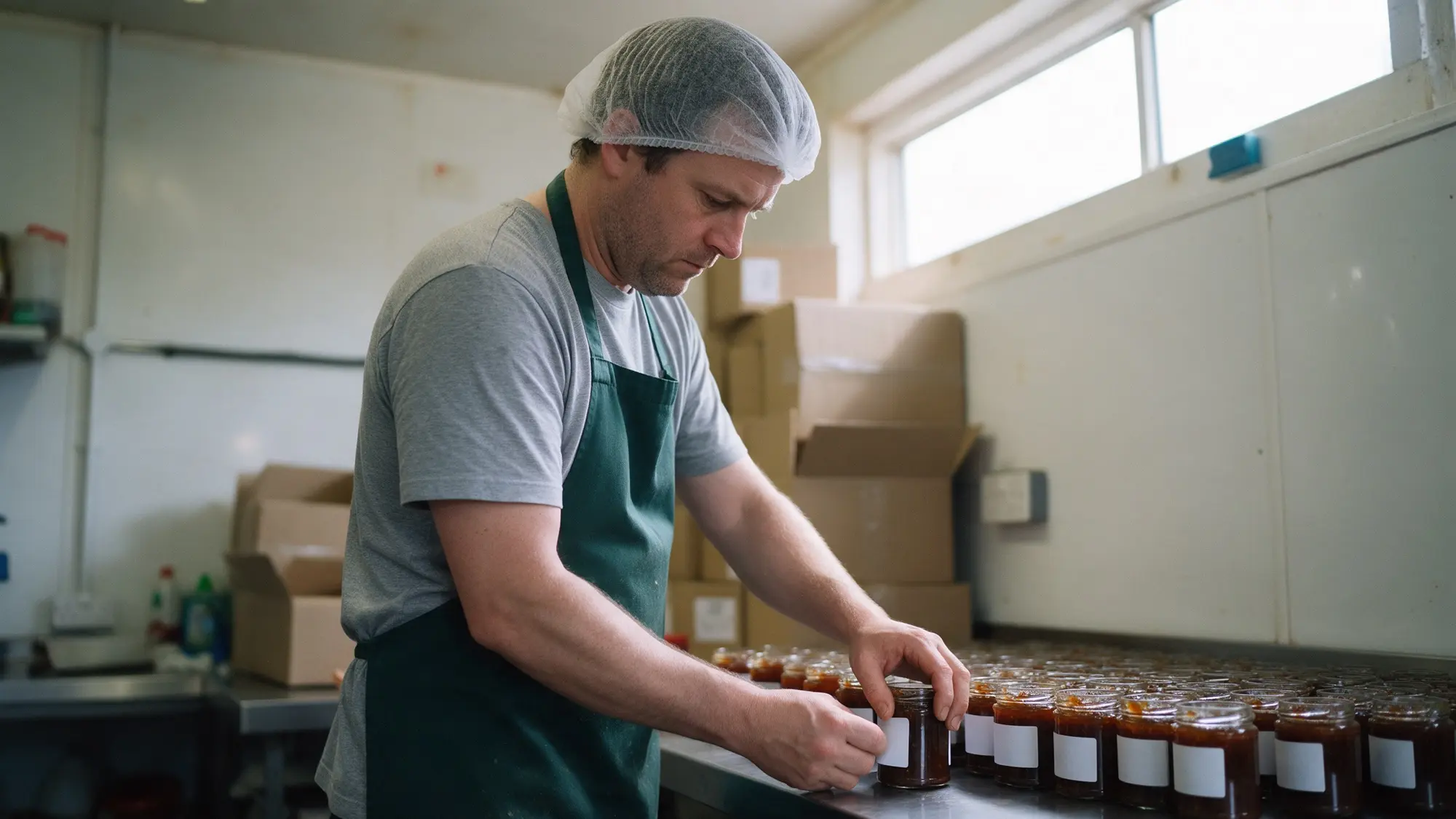
What product liability insurance covers.
Your legal liability when goods you’ve supplied hurt someone or damage their property, after the goods have left your hands.
- Your products Goods your business makes, imports, sells, supplies or distributes, including their labels, packaging and instructions. In one wording they become “products” once they’re out of your possession or control1.
- Injury and damage Compensation you’re legally liable to pay third parties for personal injury or property damage caused by your products2.
- One limit for the year In the wordings we read, the products limit is the most the policy pays for all product claims in the policy period, not just per claim1, 2.
- Sold with public liability Insurers often combine it with public liability as “public and products liability”2, 8. Public liability covers your business activities; products liability covers what your business supplies. See public liability vs professional indemnity for the other common cover.
Product liability insurance isn’t usually compulsory. The government’s business.gov.au leaves it off its list of insurance you need by law, and says you may need it “if you make, sell or supply goods”3. Some licences do require it: Tasmanian electrical contractors must hold at least $5 million of public and products liability19. Prices are often for public and products liability together: upcover says the middle half of the policies it arranged from 2022 to 2026 cost $370 to $840 a year, including GST and stamp duty. Those are upcover’s own policies across all cover limits, not adjusted for price rises over that time18.
When the law treats you as the manufacturer.
Under the Australian Consumer Law, a manufacturer must compensate a person injured because its goods have a safety defect. That can include businesses that didn’t make the goods.
| You | When you count as the manufacturer |
|---|---|
| Make the goods | Always. That includes handmade goods sold as a business4 |
| Sell under your own brand | If your name, brand or mark is on the goods, or you present yourself as the maker4 |
| Import the goods | If the maker has no place of business in Australia when you import them. Goods imported on your behalf count too4 |
| Resell or supply them | If someone planning a claim asks you in writing who made them, and after 30 days they still don’t know because you haven’t named the maker or the business that supplied you4 |
- What a safety defect is Goods whose safety isn’t what “persons generally are entitled to expect”. Packaging, marketing, instructions and warnings all count4.
- What can be claimed Injuries, losses to other people from someone’s injury or death, and damage to household goods and private land or buildings4.
- How long Court action must be started within 3 years of when the person knew, or ought reasonably to have known, of the loss, the defect and who made the goods, and within 10 years of the manufacturer supplying them4.
- Defences They include that the defect came from complying with a mandatory standard, or that scientific knowledge at the time couldn’t reveal it4.
This is separate from the consumer guarantees: goods a business supplies to a consumer, other than at auction, must be of acceptable quality, which includes safe4. The ACCC says the manufacturer or importer is generally the one who pays compensation for unsafe products5.
Who asks for products liability cover.
Marketplaces and retailers can make it a condition of selling. Some published requirements.
| Who asks | What they want |
|---|---|
| Amazon Australia, sellers | Within 30 days of your sales passing $10,000 in each month for three months in a row, or sooner if Amazon asks: liability insurance including products liability of $1 million, with Amazon named as an additional insured6 |
| Kmart, direct overseas suppliers | General and products liability of at least US$2 million, under its June 2020 terms7 |
Amazon’s agreement is the version it publishes as a PDF; the terms in your seller account apply. Importing? Damage to goods on the way is a different cover: see marine cargo vs goods in transit. Shops selling other people’s products: see retail insurance.
What public and products liability policies leave out.
Two published liability wordings leave out much the same things.
- The product itself Damage to the faulty product, and the cost of repairing or replacing it1, 2. One wording also excludes refunds2. Damage it causes to other property can still be covered1, 2.
- Recalls The cost of withdrawing, recalling, inspecting or replacing products is excluded1, 2. One wording also expects you to trace and recall faulty products at your own expense2. Recall cover can be added as an extension8.
- Warranties One wording excludes product guarantees and warranties you give, except liability under product safety and information laws1.
- Exports to the USA and Canada One wording excludes products sold there. The other adds exports back, unless its endorsements say otherwise1, 2.
- Advice and aircraft parts Professional advice (in one wording, only advice given for a fee), and products you know will be used as aircraft parts1, 2.
If a claim is declined, the Australian Financial Complaints Authority (AFCA) generally can’t hear a small business’s complaint against its insurer about public or products liability. It can hear a complaint against the business’s broker9. See what public liability doesn’t cover.
What your business must do when a product hurts someone.
Suppliers have duties of their own, whether or not they’re insured.
- Report within 2 days A supplier of consumer goods that learns of a death or serious injury or illness, and thinks, or learns that someone else thinks, its goods caused or may have caused it, must tell the Commonwealth Minister in writing within 2 days. The news can come from a customer, a repairer or an insurer4.
- Recalls A supplier that voluntarily recalls consumer goods for safety reasons must notify the Minister in writing within 2 days4. The ACCC published 265 voluntary recalls in 2024–25 and assessed 2,770 mandatory reports12.
- Online sellers “Online businesses at every stage of the supply chain must follow Australian product safety laws”, the ACCC says10. It’s an offence to supply goods that don’t meet a mandatory standard11.
- Marketplaces Several online marketplaces have signed the ACCC’s voluntary product safety pledge. They commit to remove unsafe listings, for example within 2 business days of a regulator’s request13.
Real product liability cases in Australia.
Australian court cases about injuries from products.
- Trampoline, QueenslandA man hurt his foot on a new trampoline and sued the manufacturer, saying its design and lack of a warning made it unsafe. He won $744,175 in 202414, but lost on appeal because he hadn’t proved a warning would probably have prevented the injury, and was ordered to pay costs15.
- Imported deck board, NSWA deck board imported from New Zealand snapped and a man fell. The importer wasn’t negligent, as it didn’t have to unpack and inspect the goods, but it was liable as the deemed manufacturer16.
- Tractor tyre, NSWA tyre sold without a warning exploded while being fitted. The importer and distributor was liable as the manufacturer and in negligence, and the retailer was liable too17.
The two NSW cases were decided under the Trade Practices Act 1974, which had similar rules on who counts as the manufacturer before the Australian Consumer Law replaced it in 2011.
Common questions.
Is product liability insurance mandatory in Australia?
No law generally requires it. The government’s business.gov.au says you may need it if you make, sell or supply goods, and marketplaces and retailers can make it a condition of selling.
Is product liability the same as public liability?
No. Public liability covers injury or damage from your business activities, such as a customer tripping in your shop. Product liability covers injury or damage caused by goods you make or supply. Insurers often sell them together as public and products liability.
Am I liable if I didn’t make the product?
You can be. The Australian Consumer Law treats you as the manufacturer if you import goods whose maker has no place of business in Australia, or put your own name or brand on them. A supplier that doesn’t name the maker, or the business that supplied it, within 30 days of a written request can be treated the same way.
Do you need product liability insurance to sell on Amazon?
Amazon Australia’s published seller agreement requires liability insurance, including products liability, of $1 million within 30 days of your sales passing $10,000 in each month for three months in a row, or sooner if Amazon asks. Check the current agreement in your seller account.
Do I need insurance to sell candles or other handmade products?
No law requires it. But as the maker, you’re the manufacturer under the Australian Consumer Law, and can have to compensate someone hurt by a safety defect in your goods.
Does product liability insurance cover recalls?
Generally not. The wordings we read exclude recall costs, and the cost of repairing or replacing the faulty product itself. Recall cover can be added to some policies as an extension.
How much does product liability insurance cost?
It’s often priced together with public liability. upcover says the middle half of the public and products liability policies it arranged from 2022 to 2026 cost $370 to $840 a year, including GST and stamp duty. Those are upcover’s own policies across all cover limits, not adjusted for price rises over that time.
Still have a question? A broker can talk it through with you.
Get a quote from a brokerTalk it through with a broker.
This guide is general information. A licensed or authorised broker can look at your business and explain your options.
- No obligation
- One licensed or authorised broker
- Your details go to one broker, not several
Get a quote from a licensed or authorised broker in a few simple steps
Tell us about your business and the cover you’re asking about. One licensed or authorised broker will get in touch.
Step 1 of 3Covers in this guide.
Our guides to what each cover generally does, what it costs and the rules that apply.
Sources.
- Broadform Liability Insurance Policy wording, Chubb, 2022
- General Public and Product Liability PDS and Policy Wording (AUSPOLGPL 0624 V1), Ansvar, April 2024
- Types of business insurance, business.gov.au
- Competition and Consumer Act 2010, Schedule 2 (Australian Consumer Law), compilation No. 167, Federal Register of Legislation, 16 September 2026
- Product safety responsibilities, ACCC
- Amazon Services Business Solutions Agreement (Australia), section 9, Amazon, October 2023
- Direct overseas supplier terms and conditions, clause 17, Kmart Australia, June 2020
- Product recall expenses extension, Berkley Insurance Australia, March 2024
- AFCA Rules, rule C.1.4 and the definition of Small Business Insurance Product, Australian Financial Complaints Authority, 12 March 2026
- How to sell safe products online, Product Safety Australia (ACCC)
- Search mandatory standards, Product Safety Australia (ACCC)
- ACCC and AER Annual Report 2024–25, ACCC, October 2025
- Online product safety pledge, Product Safety Australia (ACCC)
- Forostenko v Springfree Trampoline Australia Pty Ltd [2024] QSC 1, Supreme Court of Queensland, 28 May 2024
- Springfree Trampoline Australia Pty Ltd v Forostenko [2024] QCA 255, Queensland Court of Appeal, 13 December 2024
- Mayes v Australian Cedar Pty Ltd [2006] NSWSC 597, NSW Caselaw, 20 June 2006
- Laws v GWS Machinery Pty Ltd [2007] NSWSC 316, NSW Caselaw, 4 June 2007
- How much does public liability insurance cost in Australia?, upcover, 20 August 2026
- Consumer protection requirements (automatic mutual recognition), Consumer Affairs Tasmania (formerly CBOS), 7 July 2023